



Avery Dennison Report: , “Food waste has become an accepted cost of doing business” | 15-01-2026 |
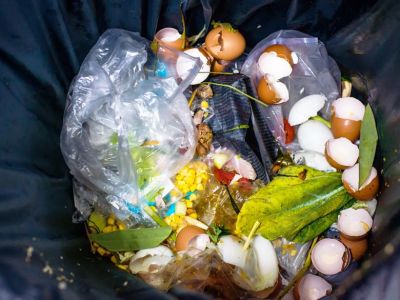
As businesses return from 2025’s holiday trading season, new data has revealed that food waste continues to erode margins and is one of the most costly, yet hidden, challenges in the global retail supply chain. This is according to the Making the Invisible Visible: Unlocking the Hidden Value of Food Waste to Drive Growth and Profitability report, published recently by AIPIA member Avery Dennison, the global materials science and digital identification solutions company.
Independent modelling warns that the economic cost of food waste across the global supply chain is forecast to reach $540 billion by 2026, up from $526 billion last year, says the report. In addition, the findings show that, on average, food waste costs are equivalent to 33% of total revenues in the food retail supply chain annually from post-farm up to the point-of-sale.
Research involving 3,500 global food retailers and supply chain leaders reveals that, despite growing awareness, 61% of businesses say they still lack full visibility into where food waste occurs across their operations. Limited influence over the most waste-intensive areas of the supply chain is a big challenge, highlighting the urgent need for targeted innovation and cross-supply chain collaboration.
The data highlights how leaders are consistently challenged at various points throughout the supply chain and most specifically across perishables. When asked to identify the three most difficult categories for waste, half pointed to meat (50%), 45% cited produce, and 28% mentioned baked goods. Over half (51%) of business leaders said that inventory management and overstocking contribute significantly to food waste. Tackling this will require a combination of solutions, including item-level inventory visibility, demand forecasting and real-time shelf-life management.
Transit remains a connecting thread between the different perishable categories, with 56% of companies reporting that they do not have a clear understanding of how much food waste happens when goods are being transported.
If current trends continue, the cumulative cost of food waste from 2025 to 2030 is expected to reach $3.4 trillion, coinciding with the 2030 deadline for the UN’s Sustainable Development Goal 12.3, which aims to halve global food waste. Despite this goal, the report uncovered that over a quarter (27%) of leaders said that they would not meet the 2030 deadline.
Julie Vargas, VP/GM, Enterprise Intelligent Labels Growth, Avery Dennison, says, “Food waste has become an accepted cost of doing business, but it doesn’t have to be. Innovation exists today to help overcome the complexity of food waste by unlocking new possibilities and transforming a historic operating cost into measurable value across the global retail supply chain.
“The retail ecosystem is changing, but not enough retailers are changing with it. The biggest challenge is what we can’t see. From transit to shelf, blind spots are silently eroding margins. With the right innovation, we can turn this loss into measurable value and shift the conversation on food waste, from being purely seen as a sustainability issue, into a business critical one. This is about unlocking efficiency and growth across the entire supply chain,” she added.
Just ahead of peak season trading results are announced, Avery Dennison found that over two thirds of businesses (67%) were predicting that meat waste during the holiday season was expected to noticeably reduce their margins and that managing this issue over one of the busiest times of the year had become a bigger operational concern than before (69%).
Michael Colarossi, VP, head of enterprise sustainability, Avery Dennison, said, “The $540 billion in lost value should be a clear call to action for the food retail supply chain to cut waste and boost efficiencies. Only by uncovering the blind spots in the chain can we take meaningful steps to reduce loss, build resilience and create lasting value for both businesses and the planet.”
Commenting on the report Eef de Ferrante, who has recently stepped down as MD of AIPIA said, “It is a huge disappointment that the consortium assembled by AIPIA to address this issue under the Smart Food Chain project, has twice been unsuccessful in obtaining vital EU funding. It would seem the Commission has a blind spot of its own in this area as SFC was primarily about reducing food waste. AIPIA must continue to work with Avery Dennison and others to address this critical issue.”
ALL AT AIPIA/AWA SMART PACKAGING WORLD CONGRESS 2026