



Self-cooling can at the touch of a button breaks recyclability barrier | 24-09-2026 |
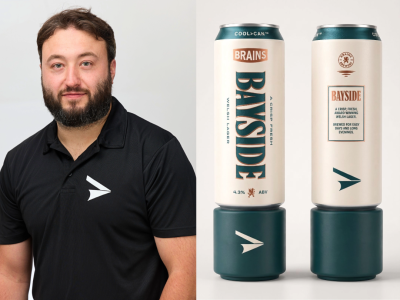
The latest self-cooling beverage can, from deltaH Innovation, is designed to chill drinks at the push of a button while remaining both cost-effective and recyclable. The Cool>Can features a simple button mechanism on its base. When pressed, it triggers an endothermic chemical reaction inside the can’s walls using a patented salt-based cooling agent called DC15. This reaction chills the drink by approximately 10–15°C, depending on the starting temperature, claims the company.
Founder and CEO James Vyse points to his experience behind a cocktail bar as an inspiration for the Cool>Can, “I’ve already had success in the beverage industry, but one of the pain points for me was drinks going warm on the go with no clear way to cool them down, because the cooling infrastructure is static. You can’t move fridges and freezers around. You can move cool boxes, but you don’t really want to put them on trains, take them to festivals and lug them around. That’s where the idea of self-cooling came from.”
To keep the salt and water separate until the button is pressed and protect the beverage throughout the cooling process, the Cool>Can uses a ‘can-within-a-can’ format – comprising a slimline inner can to hold the drink and a standard outer can to facilitate the chemical reaction.
“The brand’s liquid can be produced and sealed by its preferred partner in a normal slimline can,” explains Vyse. “We then make a slight modification to the outer can shell, attach the cooling mechanism, and slide the beverage can inside. The slimline can is mechanically sealed to the external can before we attach the chemistry and water module to the bottom. We have a pilot line in Wales for that process.”
The Cool>Can is designed to remain recyclable in light of increasingly complex sustainability regulations across global regions. deltaH emphasizes that it has secured approval from the UK and EU REACH and FDA for its chemical technology.
“There were attempts at self-cooling a long time ago, with companies using refrigerants and gas,” Vyse continues. “But you can’t put something in a can that’s going to make it unrecyclable, especially in a margin-sensitive industry. It was obvious that we definitely could not use gas. So we’re using chemistry. We realized the chemistry we had was the only way you could do it from a commercial perspective because the regulations are so sensitive when you’re working with chemistry,” he added. We’ve also optimized it to be more efficient in cooling beverages, because the chemistry wasn’t originally invented to cool a beverage down.”
deltaH previously conducted a PR campaign to gauge the market’s response to a self-cooling can. Apparently, the “overwhelming” response led to connections with global brands, but also raised questions about the technical and logistical constraints of existing beverage supply chains.
“There are certain requirements around beverage filling and so many things we’ve had to overcome, such as filling lines and the sheer scale of the can industry,” continued Vyse. “You can’t just come in and disrupt that with a new can. The industry is older than any of us, and changing a can end takes two or three years. For us to be viable as a start-up, we had to find ways of doing this more quickly and efficiently within the structure that’s already there. That has been the biggest friction for us, making sure the process of adoption is seamless. That’s exactly what we’ve done. We’ve built it in a way that allows brands to adopt it very easily.”
The company presented the new can at London Packaging week recently. It is the result of a partnership with the craft brewer Brains Brewery, with its Bayside Welsh Lager being showcased at the event.